
Introduction: The Choice That Decides the First Swipe
Packaging decides the first sale. In the crowded vanity aisle, a clear lip gloss tube can win attention before a single swipe. Picture a young founder at a bustling Bengaluru kiosk, juggling testers and trial packs while shoppers judge by clarity, fit, and feel—often in under five seconds. Data shows that up to 38% of beauty buyers trust a product more when the package is visibly pristine and leak-free; meanwhile, return rates due to micro-leaks can creep above 6% (small numbers, big costs). Brands that shift to a china clear lip gloss tube often aim for better optical clarity and tighter tolerances, but they still face subtle pitfalls in resin choice, injection moulding gates, and wiper design. So, how do you compare options fairly and avoid costly surprises?
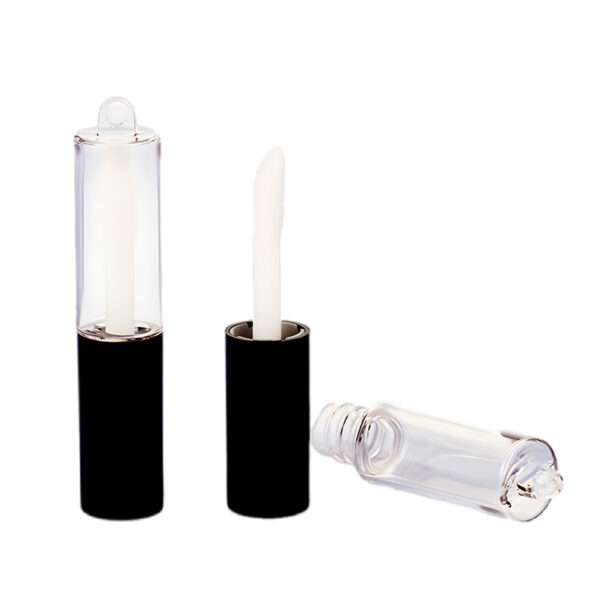
We will unpack the unseen variables—material, tolerances, and sealing—then map them to user needs and measurable outcomes. Onwards to the deeper layer.
Part 2: The Hidden Friction Behind a “Perfectly Clear” Tube
Why do familiar tubes fall short?
Let us get technical for a moment. Many legacy tubes look clear on day one but cloud by week four due to resin stress or fragrance load (especially with certain flavour oils). The culprit is often a mismatch between PETG resin grade and the solvent profile of the formula. Wiper friction can shear thick gloss, aerate it, and leave streaks on the doe-foot—funny how that works, right? Add in inconsistent torque sealing and you invite micro-leaks during transit or cabin pressure changes. These are not dramatic failures; they are quiet losses. QA batch sampling may miss them if tests do not include 100-cycle cap torque, inverted storage, and thermal swings. And when the wall thickness tolerance varies near the shoulder, you get uneven refractive lines that cheapen the shelf look (even if the formula is premium).
Look, it’s simpler than you think: most of this stems from three parts interacting—barrel, wiper, and cap stem. If the applicator wiper is too tight, viscosity spikes at the neck and consumers feel drag; too loose, and you get flooding at the lips. If threads are cut with slight eccentricity, torque drifts after a few openings and closings. If ultrasonic welding on components is inconsistent, stress shows as tiny crazing near the base. These are traditional flaws baked into older supply runs, not brand errors. The right specification—wiper durometer, thread pitch, torque band, and solvent compatibility—prevents 90% of complaints without changing the shade or fragrance. And yes, the cost delta to fix it is often less than one promotional sample per unit— and yes, that surprised me too.
Part 3: Forward-Looking Choices That Make Clarity Last
What’s Next
Now to the comparative, future-facing bit. New designs apply layered principles: co-extruded barrels with an EVOH barrier keep oxygen out while staying optically clear; UV-stable masterbatches preserve transparency under window display; and anti-scuff hardcoats reduce sleeve haze from handbags. Hot-runner moulds cut weld lines near the shoulder, so edges look “liquid” rather than faceted. When you compare suppliers of clear lip gloss tubes, ask about their mould-flow simulation and torque retention curves across 0–45°C. The semi-formal truth is simple—better engineering, fewer excuses. And if the formula includes shimmer or oil-heavy bases, specify wiper geometry with a broader relief channel to curb shear.
We have seen how legacy choices created friction, and how targeted specs remove it. Here is how to decide, using measurable signals. Advisory note, three metrics matter: 1) Clarity and haze: demand ≤2% haze after 4-week UV exposure and bag abrasion cycles. 2) Seal integrity: target zero leaks after 100 open–close cycles plus inverted storage at 40°C; verify torque retention within the defined cN·m band. 3) Dose consistency: ensure the applicator wiper recovers to spec after 50 strokes and keeps a stable deposit rate across viscosities. With these in place, clarity is not just a look; it is a performance layer that travels from factory to vanity with grace (and fewer customer emails). For deeper support on specs and sampling, a steady partner like NAVI Packaging can share data without the sales gloss.