
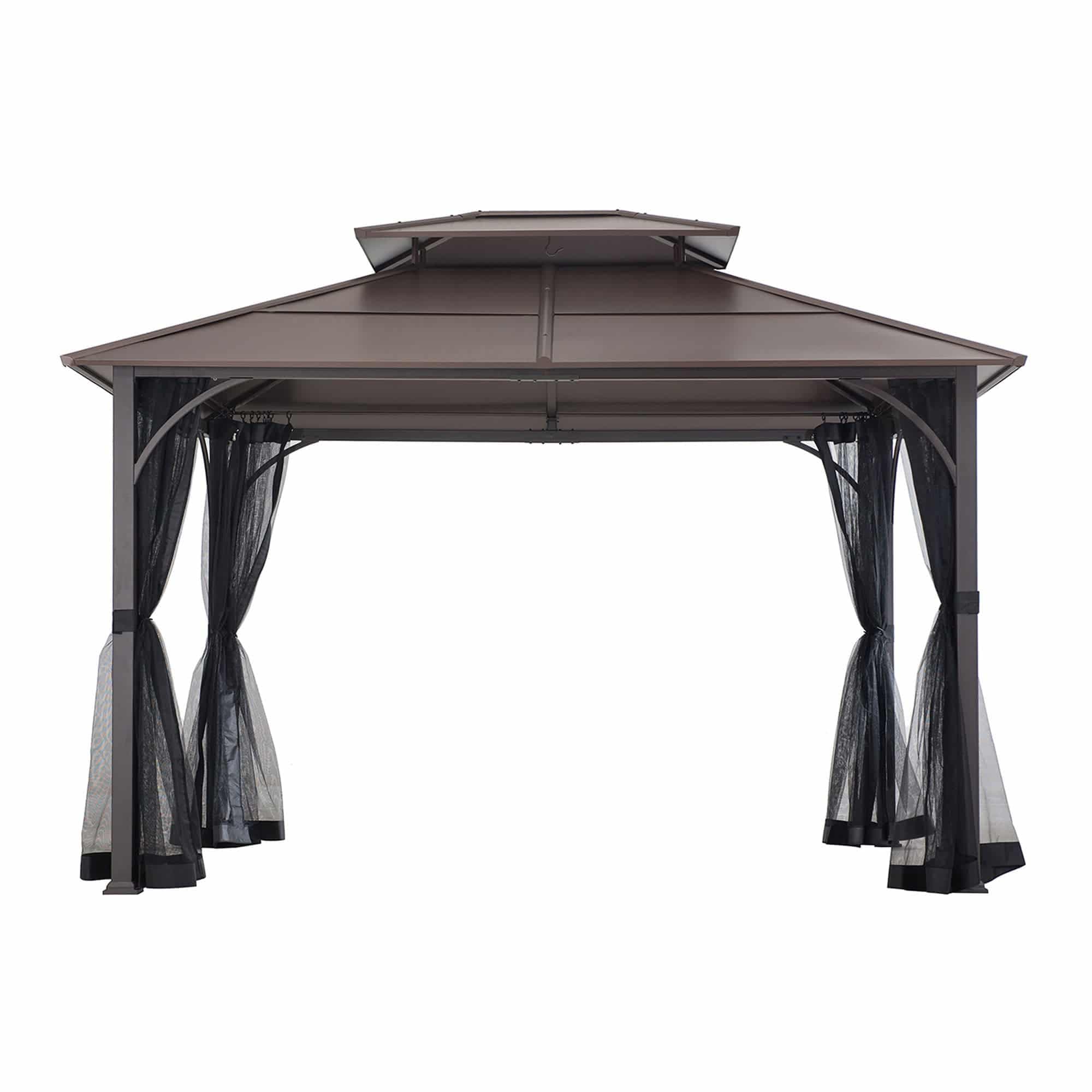
A guide to choosing Sunjoy Metal Gazebos for changing outdoor plans: the available footprint and size labels for roof style comparisons
Choosing SUNJOY metal gazebos starts with the space you have, not with a roof style alone. A useful comparison connects the listed footprint to the way you expect to use the area. Begin by measuring the intended location, then consider circulation, furniture, and the activities that need to fit beneath the shelter. This approach helps you compare product listings without treating every size or feature as interchangeable.

1. Define the yard or use case
First, identify the job the gazebo must do. You may want a compact covered place for two chairs, a larger setting for outdoor meals, or a flexible area for changing backyard plans. Write down the furniture or equipment that must remain inside the footprint. Include space for people to move around it rather than measuring only the items themselves.
Next, check the proposed location from several directions. Note nearby walls, fences, trees, doors, paths, and other fixed features. The available ground area may be wider in one direction than another, so a rectangular footprint can suit the site better than a nearly square one. Also consider whether the structure will interrupt a route through the yard. These are planning checks, not claims about any particular model.
2. Read the size labels before comparing roof styles
When comparing gazebos with metal roofs, treat the size label as the starting point for a layout decision. SUNJOY’s size guide groups examples from smaller formats such as 5×8 or 7×9 through larger formats such as 12×14, 12×16, and 12×20, associating those examples with different outdoor-space scenarios. Use the listed dimensions to narrow the field, but keep the selected model’s own product details as the controlling reference.
A small format may be more relevant when the available area is limited, while a larger listed format may suit a broader outdoor arrangement. That does not determine how many people will fit or what furniture will work. Instead, sketch the footprint on the ground with removable markers and place a rough outline of the planned furniture inside it. This simple check can reveal whether doors, seats, or walking routes compete for the same space.
3. Separate listed features from assumptions
Size is only one comparison point. The collection labels materials that include aluminum, steel, wood, fabric, and polycarbonate or PC. It also lists roof styles such as two-tier, gable, hip, and shed. These labels help organize a search, but they should not be treated as proof that every model has the same construction or appearance. Compare the material and roof description for the exact product you are considering.
SUNJOY also says that most metal-gazebo models include or support some combination of netting, curtains, ceiling hooks, or a double-tier vented roof. Those options may affect how you plan the space, especially if you need an open arrangement or want to account for side panels and overhead attachments. Because the statement covers a range of models, do not assume that one product includes every listed feature. Use the selected model’s page to confirm what applies.
| Category | Page-listed examples | How to use the detail |
|---|---|---|
| Size guide | 5×8, 7×9, 12×14, 12×16, and 12×20 | Compare the listed footprint with the measured outdoor area and planned use. |
| Features | Netting, curtains, ceiling hooks, or a double-tier vented roof | Check which stated options apply to the exact model rather than assuming the range applies to every product. |
| Materials and roof styles | Aluminum, steel, wood, fabric, polycarbonate/PC; two-tier, gable, hip, and shed | Use the material and roof labels to narrow the search, then confirm the selected listing. |
4. Compare the practical trade-offs
A larger footprint can give you more room to arrange seating, dining furniture, or other planned uses, but it also demands more available ground space. A smaller footprint can fit a compact area more easily, yet it may require a tighter layout. The right comparison is therefore not “large versus small” in isolation. It is the listed footprint against the clear space, intended use, and movement pattern in your yard.
Roof style is another filter rather than a complete decision. Two products may share a general metal-roof category while differing in their listed roof form, dimensions, materials, or included features. Keep a short comparison note for each candidate: footprint, roof style, material label, and any stated sides or accessories. This prevents a broad collection label from replacing model-specific information.
5. Confirm the selected model
Before choosing, return to the exact product listing and confirm the dimensions you plan to use. Check that the footprint matches your measured area and that the roof style matches your intended comparison. Then review the stated features, such as netting, curtains, ceiling hooks, or a double-tier vented roof, rather than carrying assumptions from another listing into your decision.
Finally, compare the page details with your written use case. If the plan has changed from a quiet seating area to outdoor dining, revise the layout before ordering. If the yard has a narrow approach, reconsider how the footprint relates to that route. The goal is a documented, model-specific choice based on the space and functions you actually planned, with the size guide used as a practical starting point.
6. Make the next step concrete
Measure the proposed site, mark the candidate footprints, and record the listed roof style and features for the models that fit. This gives you a clear way to compare options without assuming that similar labels mean identical products. For a backyard update, SUNJOY can be considered alongside the dimensions and page-listed details that match your particular space and changing outdoor plans.