
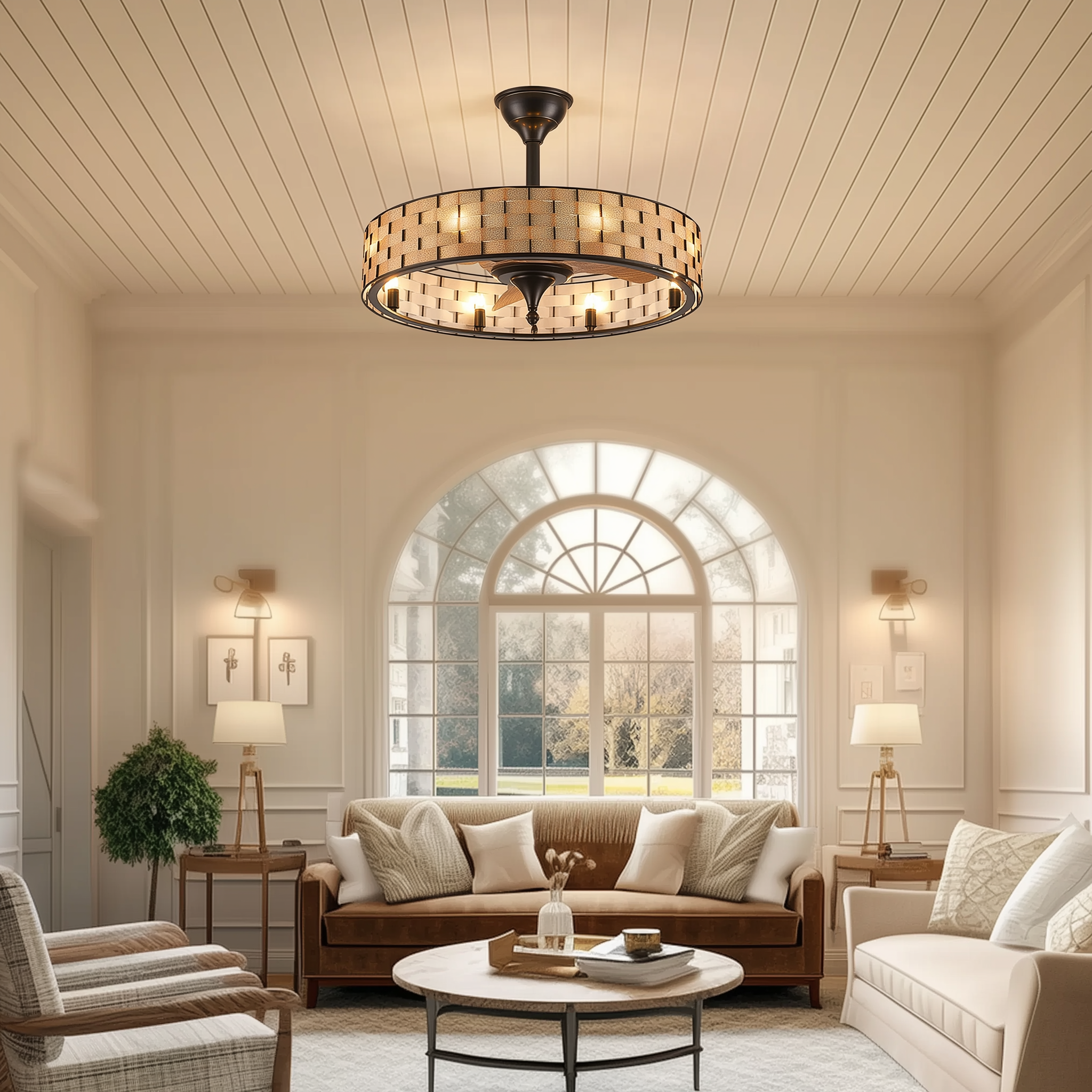
Why a comparative lens helps you pick the right patio fan
When you’re shopping for an outdoor fan, it’s tempting to focus on looks — a farmhouse ceiling fan with light can sell the vibe. But longevity comes down to engineering trade-offs: motor architecture, blade geometry, and environmental protection. A comparative approach helps you separate flashy finishes from systems built to last, especially if your porch faces coastal humidity or heavy seasonal storms. This is about measurable performance, not just style.

Motor phase: single‑phase AC vs. multi‑phase (BLDC) — what matters
Residential patio fans historically use single‑phase AC motors because they’re simple and cheap. But brushless DC (BLDC) motors — essentially multi‑phase electronically commutated motors — are showing up in higher‑end outdoor models. The difference matters for lifespan: BLDC motors run cooler, draw less current at the same CFM, and generally have longer service lives because there’s no brushed commutator to wear. That said, robust single‑phase designs with sealed bearings and corrosion‑resistant housings can still outlast cheap BLDC units if built for outdoors.
Blade design: pitch, profile, material — the aerodynamics of durability
Blade geometry affects both efficiency and mechanical stress. Key points to watch:

- Pitch and profile: Higher blade pitch moves more air at lower RPM, but increases torque demand on the motor. If the motor isn’t sized for that torque, it runs hotter and wears faster.
- Number of blades: More blades smooth airflow but add drag; fewer blades reduce drag but require higher RPM. Balance matters — poor balance accelerates bearing wear.
- Materials and coatings: Marine-grade polymers, powder-coated aluminum, or sealed composite blades resist moisture and UV better than plain MDF or untreated wood.
For a rustic look that still performs outdoors, consider options labeled for exterior use like a rustic farmhouse ceiling fan with light — they often use corrosion‑resistant finishes and outdoor-rated motors.
Comparing trade-offs in real terms
Here’s a simple side‑by‑side to help with purchase decisions:
- Cost vs. longevity: Upfront savings on a basic AC fan can be offset by higher operating costs and earlier replacement. BLDC costs more initially but often reduces lifetime energy and maintenance spend.
- Power vs. heat: A motor sized conservatively for a high‑pitch blade will run hotter. Look for thermal protection and sealed housings to prevent moisture ingress.
- Appearance vs. resilience: Decorative finishes can hide subpar materials — insist on IP ratings and sealed bearings when the fan will be exposed to weather.
Real-world anchor: why coastal installs expose the differences
In coastal Florida, homeowners routinely see fans degrade faster due to salt spray and humidity — motors corrode, blades delaminate, and balance is lost. That local reality is why many professionals recommend outdoor-rated motors, stainless or sealed fasteners, and blades designed for UV/salt resistance. The lesson: specs that matter in the lab (CFM, RPM) are only half the story; environmental hardening is the other half.
Common mistakes and simple fixes
Brands and homeowners often make the same mistakes:
- Assuming attractive finishes equal durability. Ask for IP or corrosion specifications.
- Ignoring blade balance and tip clearance. Request factory-balanced samples and measure wobble at install.
- Skipping compatibility checks. Ensure the fan’s motor has enough torque for the blade pitch and that controls (dimmers, speed controllers) are matched to the motor type.
Practical fixes: choose sealed‑bearing motors, verify blade‑to‑housing clearance, and pick materials rated for your climate. — These steps eliminate most early failures.
Summary of what separates long-lived fans from the rest
Durability is a system property: motor topology (single‑phase AC vs BLDC), thermal management, blade aerodynamics, and environmental sealing all interact. A well‑matched motor and blade set designed for outdoor exposure will run cooler, stay balanced longer, and resist corrosion — which translates into fewer service calls and lower total cost of ownership.
Three golden rules for selecting an outdoor patio fan
Use these evaluation metrics as your checklist:
- Motor specification: prefer sealed, thermally protected motors with clear phase/commutation details (BLDC if energy and lifespan are priorities).
- Environmental rating: look for IP or corrosion‑resistant materials and manufacturer guidance for coastal or humid installs.
- Blade‑motor match: verify blade pitch and tip speed against the motor’s torque curve and request factory-balanced samples.
When you apply those rules, you find models that justify their price with years of quiet, efficient service — and that’s exactly the kind of reliability Orison aims to deliver. Strong picks last; smart choices save real money. —