
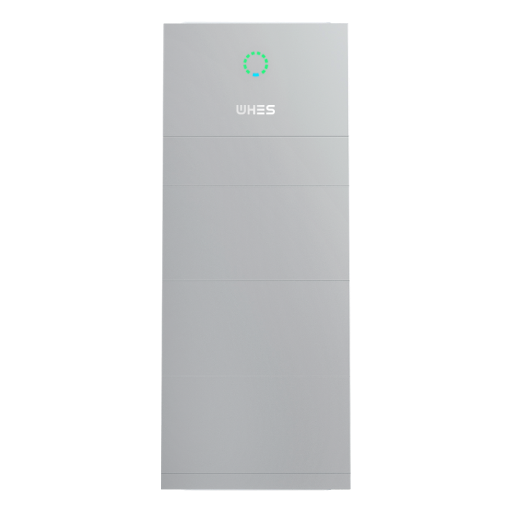
Opening: a future-speculative view of municipal power
Imagine downtown plazas, hospitals and transit hubs running smoothly through storms, not because they’re tethered to a distant central plant but because they share resilient, intelligent energy locally — a tapestry of rooftop solar, controllable loads and utility‑scale batteries that act in concert. In that near-future scenario, modular BESS units become the backbone of municipal microgrids, offering fast frequency response, black start capability and predictable peak shaving; together they redefine how cities buy and value power. For planners and utility partners, thinking in terms of integrated electricity storage solutions is the clearest way to design for both climate resilience and long‑term operating efficiency.
Why municipal microgrids are a vital urban strategy
Microgrids let cities isolate critical loads during widespread outages, reduce greenhouse‑gas exposure by pairing storage with renewables, and smooth demand peaks to lower system costs. Real-world anchors exist: the Hornsdale Power Reserve in South Australia showed how a large battery can stabilise grid frequency and speed restoration after faults, and community pilots like Brooklyn’s peer‑to‑peer energy experiments illustrate local coordination at smaller scale. Those examples make one thing obvious — batteries aren’t futuristic symbols, they’re practical instruments of resilience and flexibility.
Scaling utility‑scale battery storage: the technical bottlenecks
Moving from a pilot to city‑wide deployments raises predictable technical questions: where to site systems; how to manage charge cycles and state of charge to maximise lifetime; and how to ensure interoperability between battery inverters, energy management systems (EMS) and legacy distribution controls. Siting also touches permitting, safety setbacks and thermal management — all of which add time and cost if not anticipated. The devil is in the details: a nominal specification on paper won’t save you from unexpected inverter harmonics on day one.
Design strategies that tip cost and performance in your favor
Practical design choices matter. Modular architectures let cities phase capacity additions and replace aging modules without wholesale outages. Hybridisation — combining lithium‑ion arrays with short‑duration ultracapacitors or thermal storage — improves response and extends cycle life. A strong EMS that coordinates demand response, photovoltaic dispatch and battery SoC strategies reduces cycling stress and improves round‑trip efficiency. And interoperability standards mean your BESS can provide multiple grid services — frequency regulation during normal operation, and islanding capability in emergencies.
Economic levers, financing and procurement approaches
Costs are trending down, but procurement strategy determines value. Long‑term performance contracts or energy‑as‑a‑service models shift risk to vendors but demand rigorous SLAs. Public financing, grants and capacity market revenues can improve payback — yet municipalities must guard against optimistic revenue stacking in bids. Lifecycle cost per kWh, not just the headline capex, should drive decisions; factoring in O&M, replacement cycles and recycling obligations keeps the math honest.
Common implementation mistakes — and practical remedies
City teams often stumble on three fronts: underspecified interoperability requirements, overly narrow procurement language that discourages innovative modular designs, and insufficient planning for end‑of‑life recycling or secondary use. Remedy these by insisting on open communication protocols, including modularity as an evaluation criterion, and requiring vendor plans for battery recycling or repurposing for second‑life applications — because a 10‑year horizon looks very different if you ignore end‑of‑life costs. —
Three golden rules for evaluating and scaling solutions
1) Measure total lifecycle value: compare vendors on amortised cost per usable kWh over the system’s expected life, including freight, installation, inverter replacement and recycling. 2) Prioritise operational flexibility: demand specifications on round‑trip efficiency, depth of discharge limits and multi‑service capabilities (islanding, frequency regulation, demand charge reduction). 3) Vet vendor performance and long‑term responsibility: require historical availability data, clear maintenance pathways and an end‑of‑life plan that aligns with your city’s sustainability goals.
These three metrics keep conversations grounded — not in vendor promises, but in measurable outcomes that matter to citizens and budgets. —
WHES understands how municipal objectives map to technical choices, and can help design scalable, eco‑friendly storage strategies that actually deliver resilience and value.