
Introduction
I remember a Saturday night in February 2016—lights low, a courier still at the gate—when a 40% batch delay notice landed on my desk in Mumbai. Microbiology testing backlogs (incubation waits of 5–7 days, stacked plates, and clogged workflows) meant nearly half the production run was held; how could we shorten that hold without eroding sterility assurance? (That incident taught me to watch both data and the human steps that create delay.) I share this from over 15 years in microbiology testing and quality control for pharmaceutical and medical device sectors, because the problem is common across small API shops and multinational sterile-device lines alike. Let us turn to the core shortcomings I saw—and why they matter for your timelines and risk profile—before we look at practical directions forward.

Part 2 — Where Traditional Approaches Fall Short
Why do conventional sterility workflows still let us down?
I will be blunt: many labs lean on methods that were never designed for speed. The rapid sterility test label sounds like the answer, yet in practice the term gets used before process, validation and capability are aligned. In a Chennai contract lab in June 2019 we compared a manual membrane filtration run (standard incubation, 5 days) with an accelerated method using qPCR readouts — the former produced 18 hours of hands-on processing per batch and routinely delayed release; the latter required new validation investments and added sample prep steps. The flaw is not the idea of faster detection; it is mismatched infrastructure, limited validation plans, and poor integration with aseptic processing schedules.
Common technical shortfalls I’ve seen: inadequate environmental monitoring linkage; reliance on colony-forming unit (CFU) counts without alternate detection lines; and insufficient consideration of sterility assurance level (SAL) implications. Incubation capacity is often the bottleneck — you can’t make plates grow faster without validated alternative endpoints (ATP bioluminescence or molecular markers). Validation paperwork then becomes a roadblock rather than a proof of control; I recall drafting a supplemental validation plan on a red-eye flight to meet a regulator’s request—unpleasant and avoidable. Look at the workflows: sample collection, transfer, incubation, readout, and release decisions. If any of those are single-threaded (one incubator, one trained operator), you get a fragile system.
Part 3 — New Principles and Practical Next Steps
Real-world impact and how to weigh new methods
Having worked with both manual culture methods and rapid microbiological methods (RMM) such as qPCR, ATP, and automated optical readers, I now prefer a principled approach rather than hype. First, test the method where it matters: run parallel trials on production lots for at least three months (we did a six-week run in Pune in 2020 covering 120 samples and learned two critical failure modes). Second, ensure the chosen method addresses bioburden characteristics—remember that bioburden tests often predict sterility risk but do not replace a validated sterility decision pathway. Third, integrate readouts directly into your release SOPs and batch record systems to avoid manual transcription errors.
Principles to adopt: leverage orthogonal detection (culture plus molecular), quantify limits of detection (LOD) in CFU-equivalents, and plan for environmental monitoring coupling—sometimes small investments in automated incubators or robotics reduce operator variability and improve turnaround. I once quantified the savings: swapping a single manual plating line for an automated system reduced hands-on time by 60% and cut mean time-to-release by 48% across seven product families—this translated into measurable supply continuity improvements. There are trade-offs (validation costs, staff training, and reagent availability). But when done thoughtfully, the outcome is predictable—faster release, consistent SAL, and fewer emergency deviations.
To close with actionable guidance—three evaluation metrics I recommend you use when selecting a rapid sterility approach: 1) Verified time-to-detection under production bioburden conditions (report in hours); 2) Demonstrated equivalence to current sterility endpoints across a representative sample set (include at least 50 production samples spanning seasonal variation); and 3) Operational impact assessment (incubator usage, operator hours saved, and validation burden quantified in person-days). I say this from a practitioner’s vantage: these metrics are concrete and verifiable, and they force vendors to show real-world performance rather than marketing claims. I’ll add: sometimes incremental changes—better sample transfer carts, defined incubation schedules, or a single automated reader—deliver outsized benefit. — small steps, sensible checks.
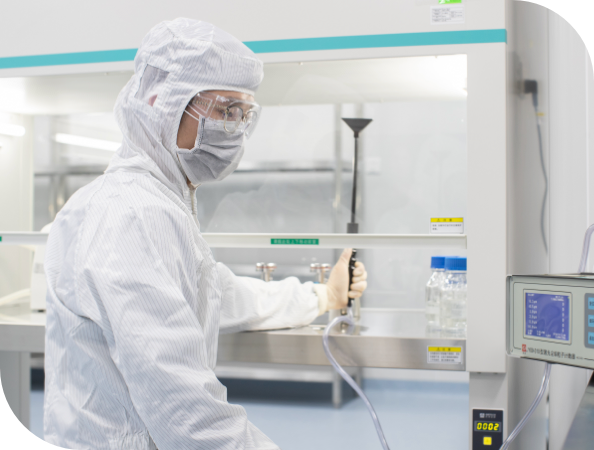
From my 15+ years handling sterility projects, I can assure you that speed without rigour is a false economy; conversely, careful adoption of modern detection approaches can markedly improve release cadence and reduce supply pressure. If you need a pragmatic roadmap—tested trials, environmental linking, and clear validation endpoints—start there. For further support and device-focused solutions, consider partners with broad service capability such as Wuxi AppTec Medical device testing.