
Introduction: A Quiet Mirror, A Loud Line
Midnight light spills on the glass, and the lines look deeper than they did at dusk. You consider a forehead wrinkle filler, a small vial of promise that might mute those tracks above the brows. Many search for the best wrinkle filler, hoping a measured syringe can turn down the years. Industry tallies count millions of injectable sessions each year; non-surgical fixes climb in double digits, and the forehead sits among the top concerns—cold numbers for a warm, human worry. But do numbers heal the story your skin tells, or do they only mark time (and tension)? The truth is plain: every line holds a habit, and every habit has a history. So we ask the real question—what are we actually fixing, and what are we missing?

Walk with me into the darker corners of the routine, where method matters as much as magic. Onward.
Problem-Driven Insight: The Quiet Costs of Quick Fixes
Why do quick fixes fail?
The phrase is everywhere, but “quick fix” rarely respects forehead anatomy. The frontalis is thin; the skin is thinner. Some gels chase instant smoothing yet ignore rheology. If G’ (elastic modulus) is too high, the filler can show or feel stiff. If viscosity is too low, it migrates and blurs the edges. Cross-linking density matters because it governs durability and how the gel behaves under motion. Look, it’s simpler than you think: forehead work needs a balanced hyaluronic acid with shear-thinning flow for movement, yet enough cohesivity to stay in plane—funny how that works, right?
Traditional paths also skip user pain points. Cannula vs. needle is not just a tool choice; it’s a strategy for safety. A microcannula reduces passes and can avoid key vessels in the glabellar complex. Technique—retrograde threading, small aliquots, slow injection—can lower the risk of Tyndall effect and improve blending with the dermal matrix. Another gap? Reversibility. If you can’t talk about hyaluronidase and predictable enzymatic reversal, it’s not truly low risk. And momentum sells “fast,” but the forehead rewards patience: layered placement, test planes, and aftercare that respects edema and biodegradation rate. The “best” isn’t a brand badge; it’s a spec sheet written on skin.
Comparative Insight: From Formula to Foresight
What’s Next
Now the forward look. New gel design leans on principles more than promises. Think precision tuning of G’/G” for motion zones, cohesive monophasic matrices for smooth glide, and particle-engineered HA that shows pseudoplastic behavior under shear. In practice, that means easier passage through a microcannula, fewer peaks and troughs on animation, and cleaner edges at shallow depths. When you evaluate the best wrinkle filler for forehead, compare not just longevity, but how the gel’s rheology maps to the thin, mobile frontalis region—because movement reveals everything. Some systems also integrate lidocaine without compromising cross-linking integrity, improving comfort while preserving structural lift. Small detail, real gain—and yes, you can feel the difference.
Real cases point the way. A conservative approach using a mid-G’ HA with strong cohesivity, delivered via 25–27G cannula, layered in microthreads, often outlasts a “thicker” gel that looks heavy by week two. Cohesion beats brute density. Reversible HA trumps irreversible blends when stakes rise near vessels. And patient outcomes improve when protocols track edema windows and revisit at 2–3 weeks for microtop-ups instead of front-loading volume. Summed up: we learned that forehead success lives where material science meets restraint. To choose well, use three metrics: first, match G’ and viscosity to tissue thickness and motion; second, check cross-linking type and cohesivity curves for stability without lumping; third, demand safety levers—clear vascular planning and reliable hyaluronidase response. This is the quiet craft behind a calm brow.
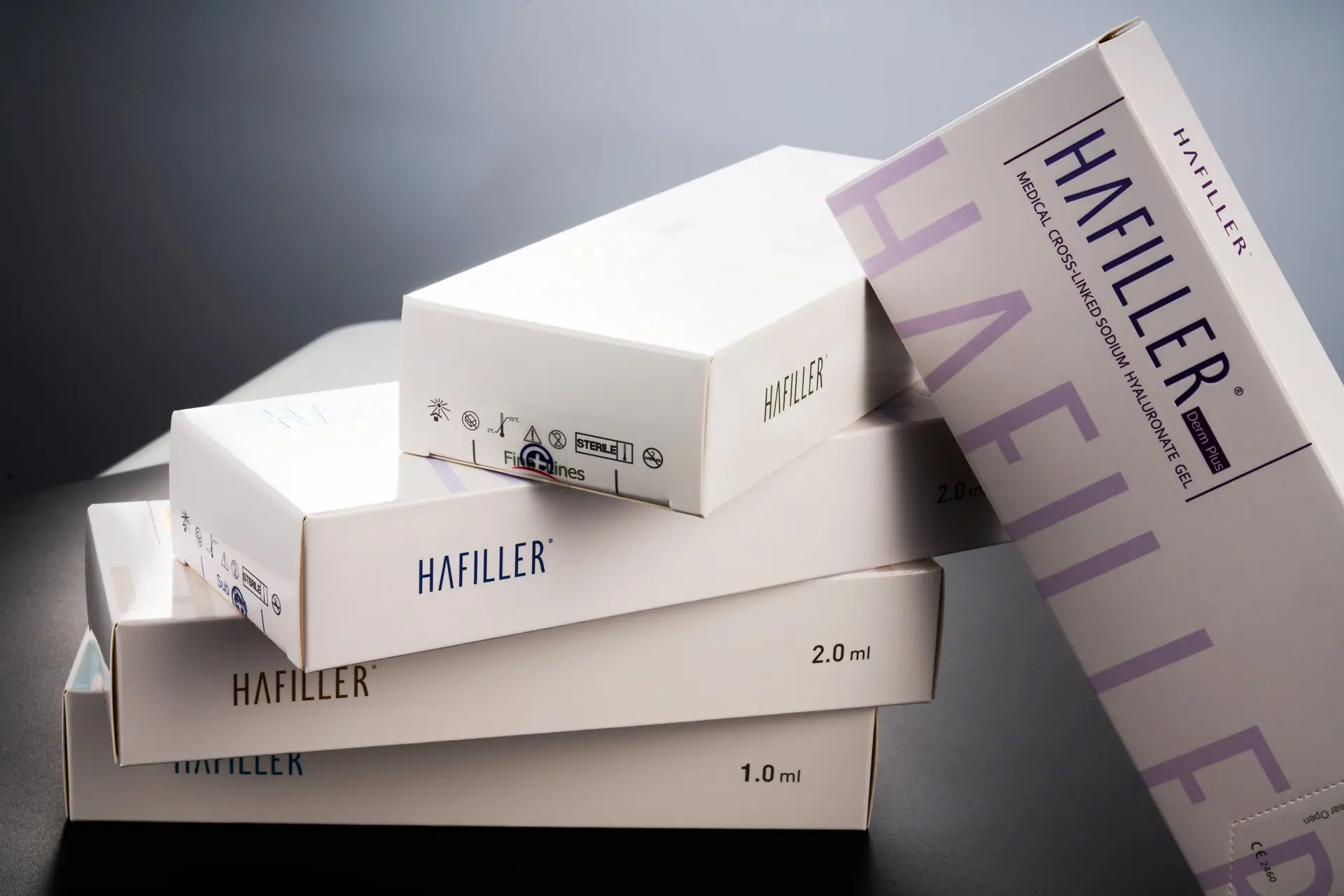
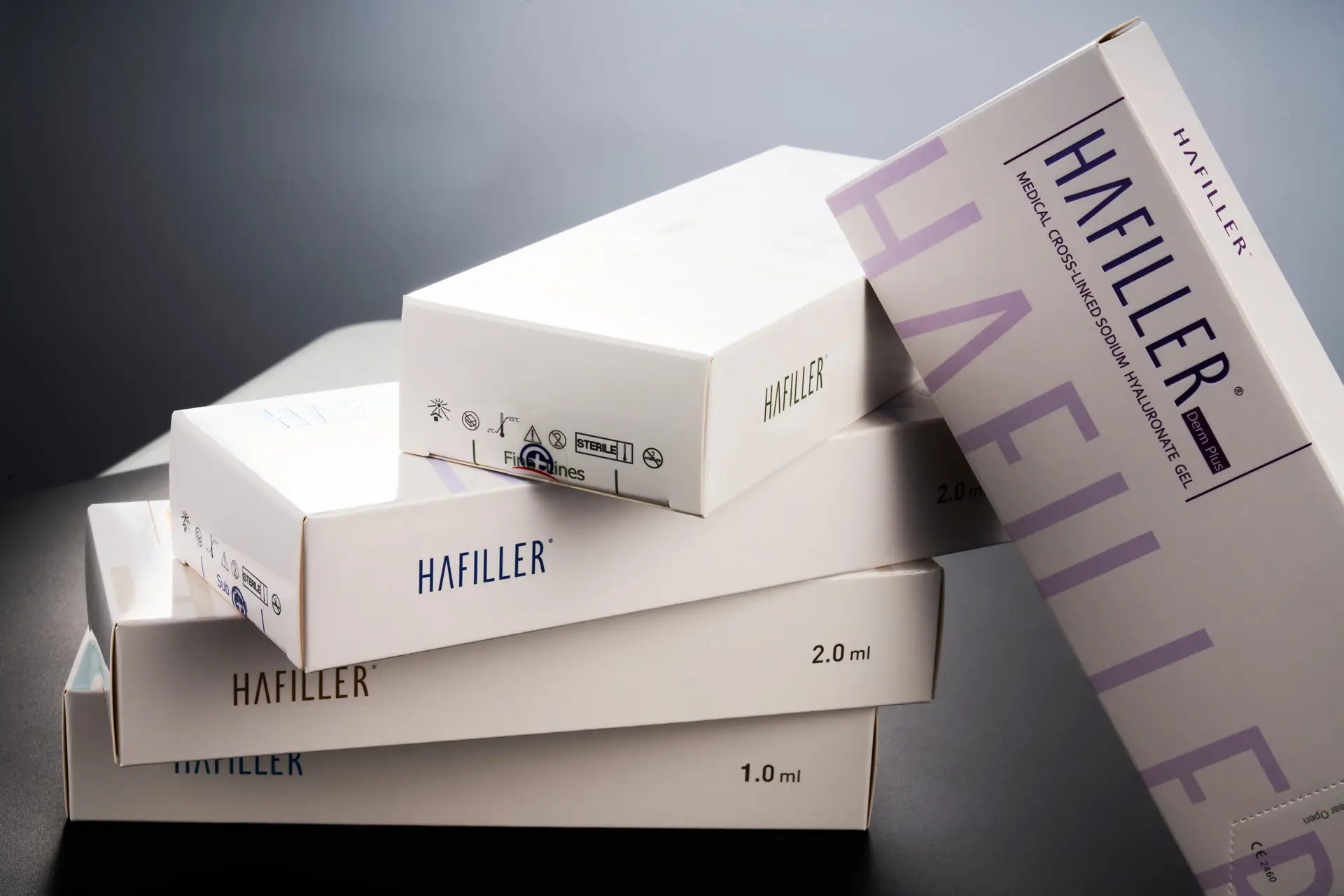
In the end, a smoother forehead is not only younger; it’s wiser. It reflects choices that respect form, flow, and the patient’s story—less noise, more signal. That’s how precision turns fear into finesse, one careful pass at a time, with a nod to the engineers and clinicians who built the path: HAFILLER.