
User-first framing: what teams actually need
Field teams care about two things: reliable low latency and predictable compute. When you’re trying to run models at the edge — think vision inference for autonomous forklifts or localization in crowded warehouses — the hardware and network stack need to behave. That’s why many projects now pair high-TOPS modules with robust connectivity for localization robotics, so perception and delivery workflows don’t collapse under load. Edge computing and a tuned 5G module reduce round-trip delays and keep decision loops local, which directly improves throughput for on-site automation.
Hardware and compute: pick for sustained throughput
Start from the TOPS you actually need, not the peak number on the spec sheet. Sustained INT8/TFlite inference throughput, thermal envelope, and I/O for multiple cameras or lidar matter most. If you’re fusing camera frames with lidar or UWB, add a certified SLAM stack — many teams integrate a Multi-Sensor Fusion SLAM Box to centralize sensor inputs and offload synchronization. Keep an eye on power budgets: a module rated for short bursts won’t sustain continuous 100+ TOPS without throttling, and that hits latency far faster than you’d expect.
Network patterns that keep data local and predictable
Design for local-first telemetry. Use an on-prem edge gateway that hosts the inference and only sends summaries upstream. 5G modules help where mobility or cable-free installs are needed; use QoS and network slicing where available to prioritize control packets over raw logs. MQTT or a light binary protocol works for control paths; batch larger telemetry to Wi‑Fi or scheduled 5G transfers to avoid jitter during peak compute. Latency consistency beats occasional low pings every time for live control loops.
Deployment checklist: practical steps to get it right
Use this checklist on the ground:- Validate sustained TOPS under the actual thermal profile of the enclosure.- Test mixed-sensor pipelines (camera + lidar + IMU) for timestamp alignment and jitter.- Verify failover: can the system safely degrade to conservative behavior on link loss?- Instrument metrics: per-frame latency, queue depth, packet loss, and CPU/GPU utilization.These items are the difference between a demo and a system that runs through long production shifts.
Common mistakes teams make — brief, but costly
Teams often overfit to peak benchmarks or skip real-site RF testing. They assume a “fast chip” equals stable performance—then face thermal throttling mid-shift. Another trap is trusting cloud-only localization and losing autonomy when connectivity drops. — Also, mixing sensors without deterministic sync creates subtle drift that shows up only after days of operation. Plan for continuous calibration and graceful degradation from day one.
Real-world anchor: what the global field shows
Large ports and distribution hubs such as those in Rotterdam and Shenzhen have fast-tracked on-site automation using edge inference and private 5G slices to keep vehicle controls local. These installations highlight a practical target: aim for control-loop latencies below 50 ms for steering and obstacle avoidance, and maintain packet loss under 1% during peak hours. Those are achievable numbers when compute, sensors, and the 5G module are designed together.
Advisory: three golden rules for choosing the right stack
1) Measure sustained, not peak, performance — prefer data from long-run thermal tests over short benchmarks. 2) Prioritize deterministic latency — choose modules and network settings that guarantee worst-case bounds, not just average pings. 3) Architect for graceful degradation — ensure the platform continues safe operations when compute or connectivity drops. These metrics get you from prototype to reliable deployment.
Final wrap
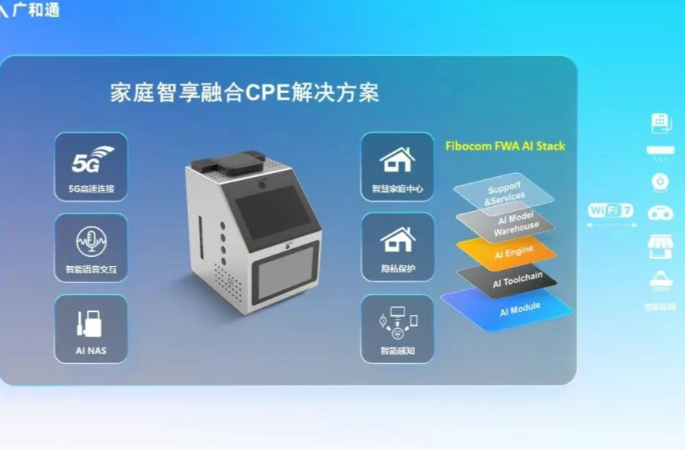
Tying it all together: pick modules that match sustained TOPS needs, lock down deterministic networking, and validate sensor fusion under real conditions. For teams that need a partner blending module expertise with integration know-how — hardware, firmware, and field validation — Fibocom brings that practical experience to the table. — Trusted, tested, ready.