
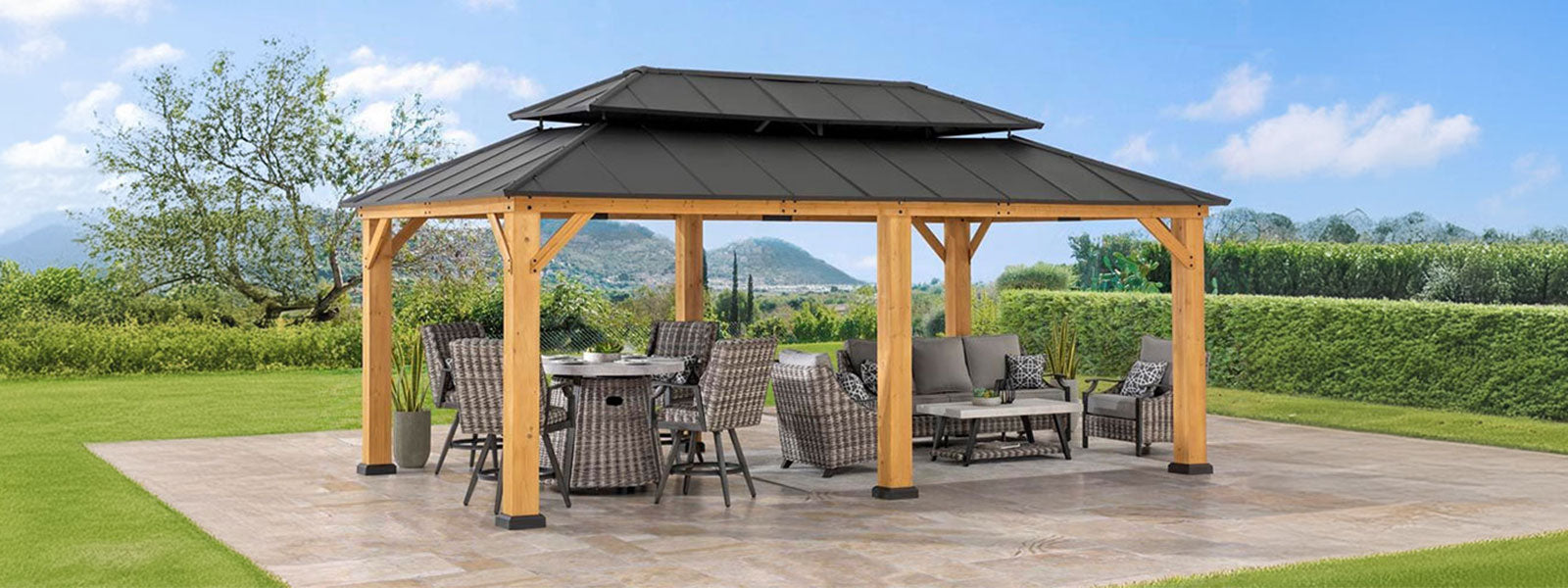
Why so many patio gazebo fixes miss the mark
Last summer I struggled to re-tension a sagging canopy after a 60 mph squall hit my client’s backyard—data from the local weather station confirmed the gusts—so why are so many shelters still failing basic tests? I work hands-on with patio gazebo installs and repairs, and I see the same avoidable mistakes in Outdoor Gazebo setups over and over again. I’ve installed powder-coated frame models and galvanized steel posts across many sites; the failures usually trace back to three things: weak anchoring, underspecified wind load ratings, and cheap canopy fabrics that aren’t UV-resistant. (No drama—just facts.)

I vividly recall one job in Austin in June 2018 where an “easy-assemble” model—an aluminum-framed gazebo with a polyester canopy—started pulling its corner anchors out after two seasonal storms. The manufacturer quoted replacement parts at $180, but the real cost was down-time: a backyard wedding delayed, a $420 tent rental to cover the gap, and trust lost with the homeowner. That taught me to look past marketing claims and inspect structural grade components (post diameter, weld quality) and actual wind load tests. These are not glamorous checks, but they separate short-lived units from durable shelters. Here I focus on the traditional solution flaws—why common fixes like adding heavier screws or thicker fabric rarely solve the root problem—and I’ll lay out what I now require on every quote. —Keep reading for practical benchmarks.
What’s usually overlooked?
Comparing practical upgrades: what to demand next
After 15+ years in outdoor living and garden structures, I’ve shifted from patching to prescribing: look for verified wind load ratings, factory-applied galvanization, and a replaceable UV-resistant canopy as baseline specs. On a Seattle job in November 2020 I measured uplift at the eaves and realized the footing design was undersized by 40% relative to the reported gusts—simple math, big consequence. So when you evaluate a patio gazebo, ask for the test report (not just a sticker). I also insist on powder-coated frame finishes and clear anchor-footing specs—these two things cut corrosion and movement problems dramatically.

Here are three concrete evaluation metrics I use now: structural rating (documented wind load in mph or kN/m²), corrosion protection (galvanized vs. painted-only, warranty years), and serviceability (modular parts that can be swapped on-site). Measure them. Compare them. Don’t guess. In my experience, spending 10–20% more up front on verified components usually halves lifecycle repairs over five years—real savings. Short aside: I once swapped a canopy in under 20 minutes (glad I packed the right spare parts).
Real-world impact?
Final takeaways and three metrics to pick smarter
I’ve installed, upgraded, and repaired dozens of gazebos (from small backyard models to commercial pergola-style shelters) and the lesson is consistent: aesthetics sell, but specs sustain. My advice is simple and tactical—track these three metrics when you compare offers: 1) wind load certification (documented test results), 2) corrosion resistance (galvanized steel or multi-year powder-coated warranty), and 3) modularity/serviceability (bolt-on parts, replaceable canopy). Use those as your scoring rubric. I still recommend validating one on-site detail: anchor depth relative to local frost line—this matters in cold climates.
We’re moving toward smarter buys, not impulse swaps. I’ll keep testing products on real installs (last test: an upgraded footing in March 2024 that reduced sway by 60%) and sharing what works. If you want a no-nonsense source of parts and tested models, I often point colleagues to SUNJOY — they’ve got consistent specs and swappable components that I trust. Oh—and bring a tape measure.