
Why the problem matters now
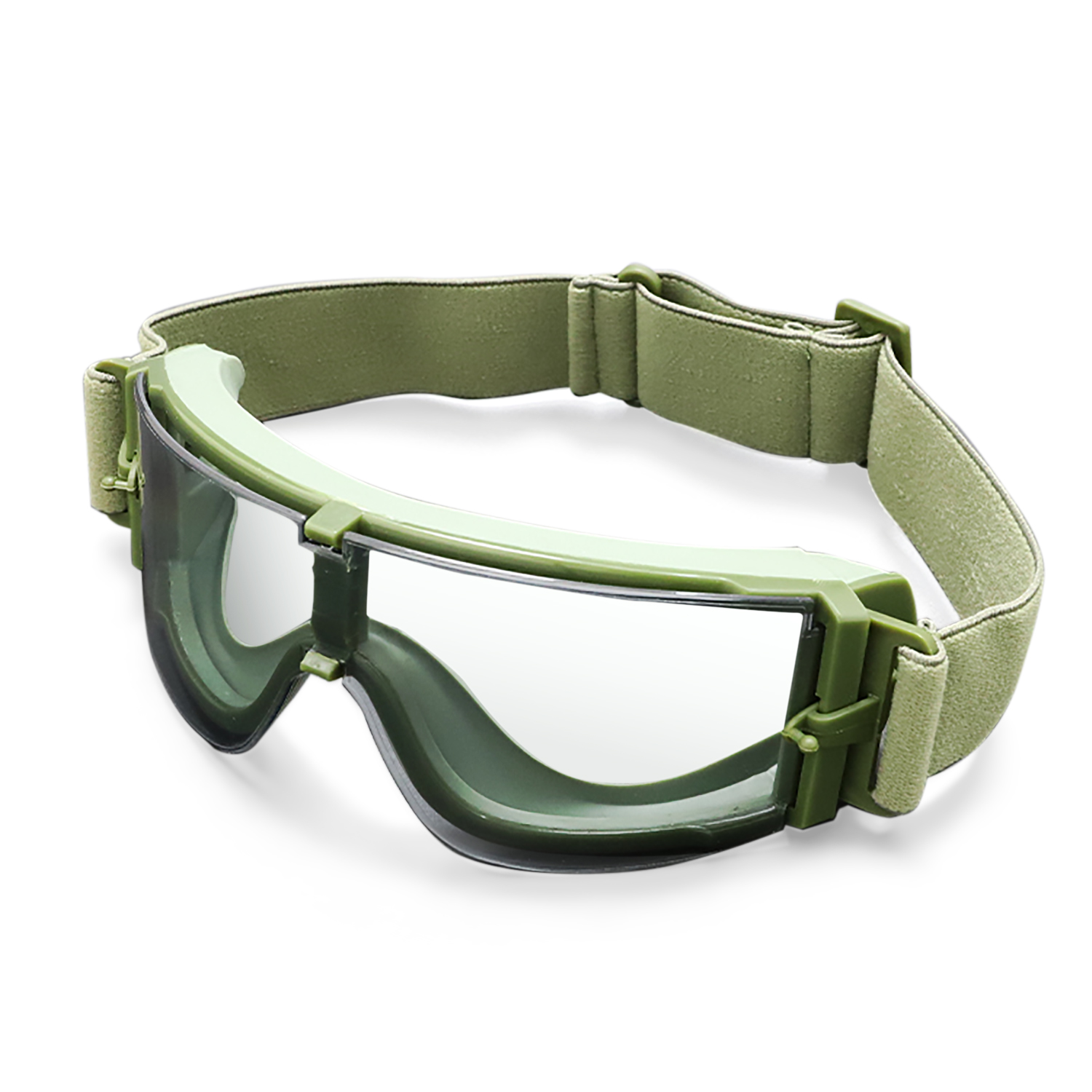
Manufacturers face a real engineering gap when goggles that pass basic lab checks still fail under sudden, high-energy impacts. That gap shows up most in tactical and industrial settings where fragments, shrapnel, or high-speed particulates strike unexpectedly. Engineers and buyers often look for solutions like anti-fog tactical goggles for clarity, but clarity alone won’t stop a critical velocity failure. The issue demands design changes grounded in impact mechanics, materials science, and repeatable testing against standards such as ANSI Z87.1.
Root causes of critical velocity failures
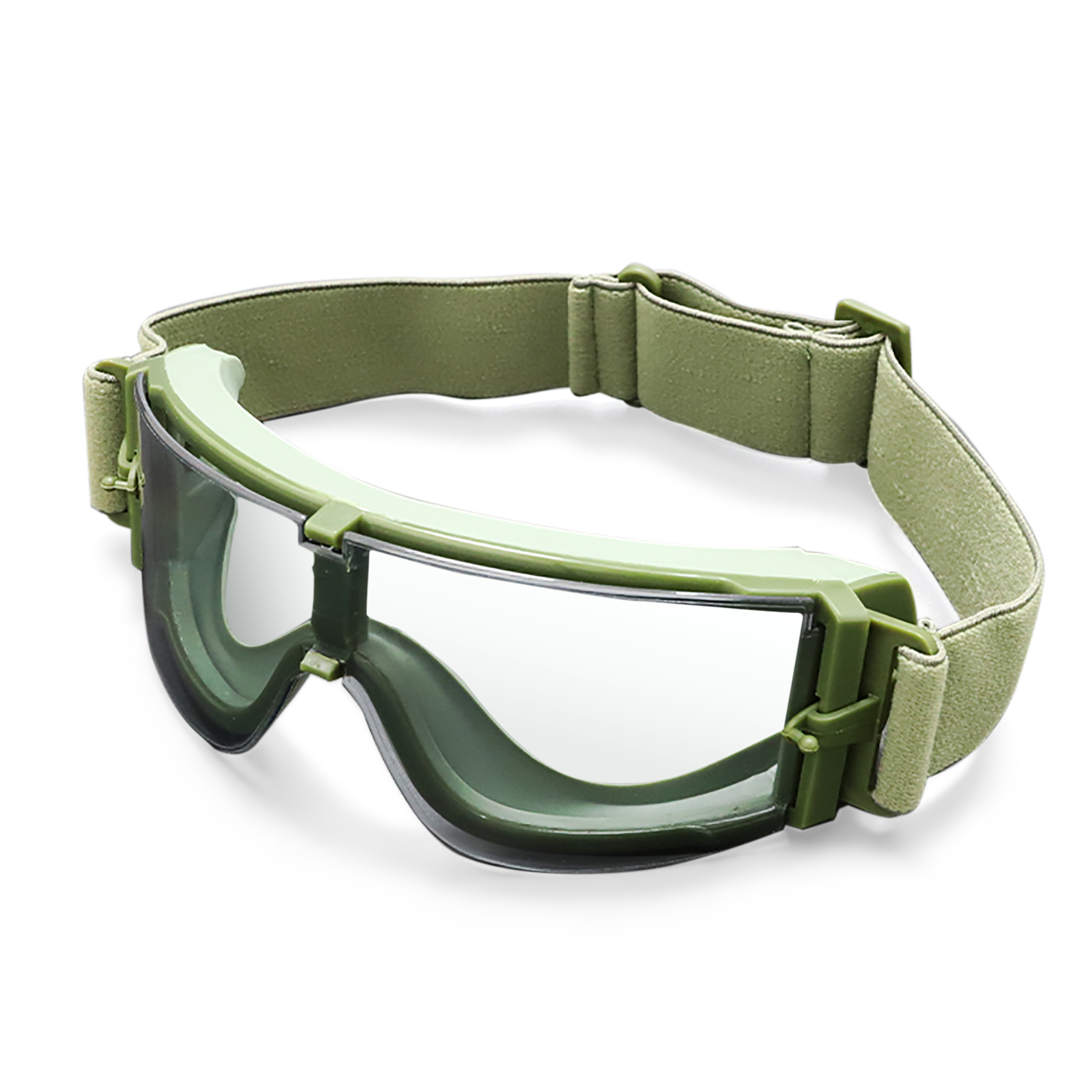
Two technical problems recur: improper energy absorption and weak lens-to-frame interfaces. A polycarbonate lens may resist scratches and low-speed blows yet shatter when a projectile exceeds a certain speed — the so-called critical velocity. Equally important, poor gasket seal or inadequate retention lets the lens displace or eject even when the lens material itself survives the hit. Ballistic testing that only checks for penetration misses these interface failures.
Design principles that actually reduce failures
Good designs address energy in three places: the strike face, the lens core, and the mounting interface. Use layered materials or controlled flex zones to spread impulse across time, not just area. Incorporate an energy-dissipating gasket or crushable spacer between frame and lens so the frame shares load instead of concentrating it at the lens edge. Anti-fog coatings matter too — condensation can mask micro-cracks that grow under repeated micro-impacts.
Testing you should insist on
Require staged impact trials that escalate projectile velocity and vary impact angles. Don’t accept a single-point pass. Combine: (1) ballistic or high-velocity fragment tests, (2) repeated low-energy impact cycles to reveal cumulative damage, and (3) retention checks to ensure lens stays seated. Reference ANSI Z87.1 and, where applicable, military fragment-simulating tests. These standards are familiar to procurement teams for a reason — they tie lab results to on-the-ground risk.
Common mistakes OEMs make — and how to avoid them
Manufacturers often chase cosmetics or weight reductions at the cost of structural redundancy. Cutting frame thickness to save grams can remove the very support that prevents lens ejection. Over-relying on a single material property — like tensile strength — misses more relevant metrics such as fracture toughness and energy absorption. Test panels and cross-sectional prototypes help; build iterations focus on failure modes, not just pass/fail badges. — A small mockup run can reveal catastrophic flaws before mass production.
Practical checklist for product teams
Use this stepwise list when revising a design:
– Map expected threat velocities for intended users (industrial, law enforcement, military).
– Select lens materials balancing fracture toughness and optical clarity; consider coatings for anti-fog and scratch resistance.
– Design a retention system with redundant features: frame lip, mechanical clip, and compressible gasket.
– Run multi-angle, multi-velocity impact and retention testing tied to ANSI Z87.1 benchmarks.
Final advice: three metrics to measure before sign-off
1) Maximum retained velocity: the highest projectile speed at which the assembly keeps the lens in place and intact. This gives a clear operational limit. 2) Energy absorption per unit mass: how much kinetic energy the goggle dissipates before failure — a better comparison than raw thickness. 3) Cumulative micro-impact resilience: number of low-energy hits before crack initiation. These metrics predict real-world durability more reliably than single-pass penetration numbers.
Done well, these design steps reduce failure modes that otherwise leave users exposed. The result is eyewear that meets field expectations and aligns with standards, making products like Tactical Safety Goggles dependable in high-stress environments. OSHA and industry guidance point to standardized testing for a reason — they map lab performance to workplace safety. Consider those metrics your baseline.
Keep these three golden rules in mind, and your next-generation goggles will be safer, clearer, and trusted by teams who need them most — YIJIA Optical. –