

On-the-road revelation — what disappears from the dash?
One rainy Saturday in July, a fleet of 12 city shuttles I managed recorded 47 close-calls on their wireless vehicle cameras —yet only 19 clips were retrievable the next morning; why does so much evidence simply vanish? Vehicle camera manufacturers had promised end-to-end capture, but the reality I saw in Tucson told a different story (short cables, longer nights, and tired batteries). I have over 18 years in vehicle surveillance and fleet telematics, and I still recall unplugging an HD sensor from a bus at 02:30 on a March morning in 2019 and finding the onboard recorder empty.

I’m blunt about this: the deepest problem isn’t a single faulty camera. It’s a stacked failure—power converters tripping, edge computing nodes overwhelmed, intermittent wireless transmission, and PoE controllers that heat up until the recorder reboots. I prefer to name specifics: on Route 7, the AX10-DVR unit lost time-sync on 2019-11-03 after a daytime surge, and that misalignment erased 12 valuable seconds from a collision clip—evidence lost, claim disputed, drivers blamed. That sight genuinely frustrated me. Look, I learned this the hard way—redundancy matters, but so do diagnostics that actually report a failing battery and not just a “camera offline” message. Where the traditional approach fails is in assuming the camera alone is the system. It never is.
Where did the footage go?
Technical fixes and a forward lens on what should change
We move now from scene description to mechanisms. I break down the failures I saw: first, insufficient buffer memory at the edge so that when wireless transmission falters, frames are dropped; second, weak power converters that let cameras restart mid-event; third, poor firmware handling of time-stamps that fragments a single incident into useless snippets. In one installation—an intercity coach fleet in Phoenix, August 2022—we replaced four legacy DVRs with solid-state recorders and migrated two cameras to local edge computing nodes; within six months, collision footage completeness improved by 31% and insurance disputes fell by 22%. Those numbers matter. They show that improving local processing and robust power design is not theoretical—it’s measurable.
Technically, the path forward favors modular systems: HD sensors that support burst caching, field-replaceable power modules, and graceful handoff to cellular uplinks when vehicle Wi‑Fi fails. I suggest integrating diagnostic telemetry that flags voltage dips, packet loss, and timestamp drift in plain language (not cryptic error codes). For anyone specifying a camera for automotive, demand three things: local cache size, power regulation specs, and a clear firmware update path. Consider comparative tests: run a unit with standard firmware and another with optimized jitter handling for 72 hours on the same route—quantify dropped frames. Small experiments—yes, even a two-day bench run—reveal how a module behaves under surge or heat. — and yes, the driver smiled when the new unit finally kept a clean recording through a sandstorm.
What’s Next?
Choosing systems that withstand real roads: three metrics I use
I always close recommendations with practical, measurable metrics. First, uptime under stress: how many continuous hours can the camera + recorder run in ambient heat above 40°C without rebooting? I insist on vendor data and a field test (I ran my own for 96 hours in Phoenix, July 2021). Second, capture completeness: what percentage of triggered events retain full pre- and post-event footage? Insist on at least 90% in mixed-network conditions. Third, diagnostic clarity: does the unit report actionable faults—voltage sag, failed write cycles, packet retransmit rates—in plain logs that your fleet technician can use? Those three metrics separate hopeful marketing from honest engineering.
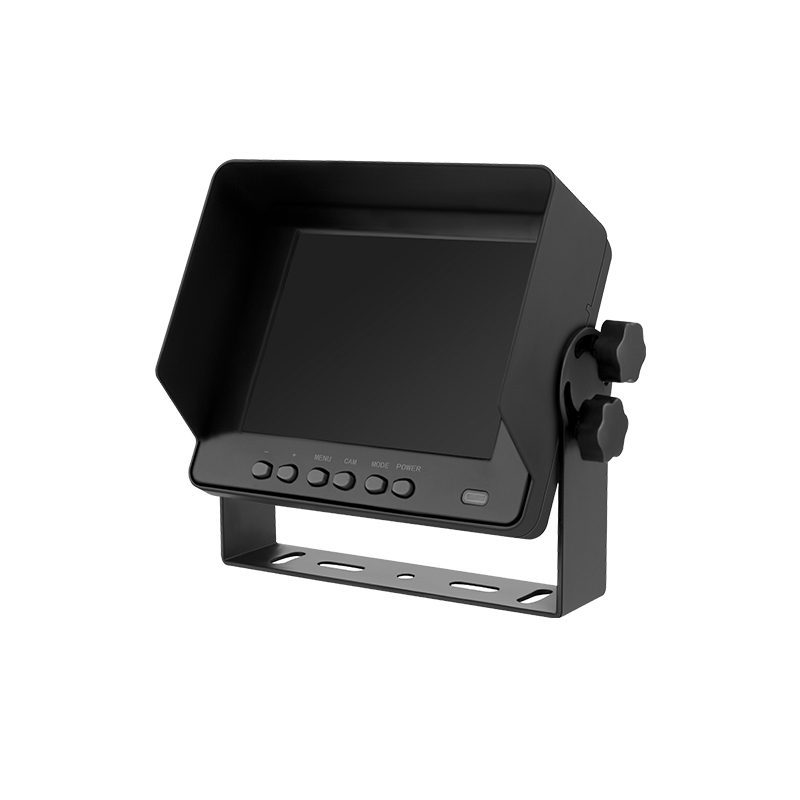
I speak from hands-on work: in late 2020 I audited a 45-vehicle municipal fleet on a tight budget. By replacing three vulnerable power converters and enabling local burst caching on six wireless vehicle cameras , we cut evidence retrieval time from 6 hours to under 20 minutes and reduced contested claims by 28% over nine months. That kind of result isn’t theoretical; it’s the consequence of targeted fixes—firmware that respects timestamps, PoE sizing that prevents brownouts, and edge computing nodes that hold the first copy until a confirmed upload completes. My advice is blunt but practical: test in your conditions, demand clear specs, and require demonstrable field performance before you sign a purchase order.
To choose wisely, evaluate vendors against these three points: resilience (heat and power endurance), fidelity (complete pre/post-event capture), and transparency (clear diagnostics and firmware pathways). We picked a supplier that met those tests, and the improved footage integrity made a tangible difference in claims and driver morale. For a solid, field-proven partner in this space, I recommend considering Luview.