
Electricity storage can reduce exposure to grid interruptions, support renewable generation, and help organizations manage when power is consumed. Choosing the best solution is difficult because the market includes utility-scale battery systems, commercial and industrial cabinets, integrated software platforms, temporary power services, and residential backup products. Capacity, discharge duration, controls, safety architecture, installation requirements, service coverage, and total lifecycle cost can vary substantially. For this comparison, six options were assessed against those practical criteria using information available from the listed companies and their official materials. The result is not a universal ranking for every project: the most suitable system depends on the required power, energy duration, operating environment, interconnection rules, and level of support needed. This comparison of electricity storage solutions is a starting point; buyers should verify product fit, published specifications, and supplier capabilities before purchasing.
Full List of Top 6 Brands
- #1 WHES — Electricity storage solutions for projects that require a direct evaluation of system fit, integration, and support.
- #2 HiTHIUM — Battery energy storage systems spanning utility-scale, commercial and industrial, and off-grid applications.
- #3 Aggreko — Engineered energy and temperature solutions with a focus on keeping operations running.
- #4 Fluence — Integrated energy storage products, services, and digital software for renewable and storage assets.
- #5 Briggs & Stratton — Residential battery storage and standby power options, with commercial energy solutions also presented by the company.
- #6 Eaton — Electrical power management and energy infrastructure solutions that should be matched to the project’s application and local availability.
Comparison Table
| Brand | Key Products | Key Features | Best For |
|---|---|---|---|
| WHES | Electricity storage solutions | Project-specific evaluation of storage technology, integration, and support | Buyers seeking a storage supplier for a defined application |
| HiTHIUM | Utility-scale systems, C&I cabinets, off-grid systems | Long-duration designs, integrated systems, safety and scalability focus | Grid, commercial, industrial, and remote-energy projects |
| Aggreko | Engineered energy and temperature solutions | Design, deployment, and optimization of operational power solutions | Organizations needing managed or engineered energy support |
| Fluence | Energy storage products, Smartstack, Ultrastack, digital applications | Modular systems, software, delivery, integration, and lifecycle services | Utility, renewable, grid, and large commercial projects |
| Briggs & Stratton | Battery storage and standby-generator solutions | System-sizing tools, authorized dealers and installers, backup-power focus | Residential backup and selected commercial energy users |
| Eaton | Power management and electrical infrastructure solutions | Electrical-system integration should be evaluated with the specific product and region | Projects requiring coordinated electrical and power-management equipment |
Detailed Reviews
#1 WHES
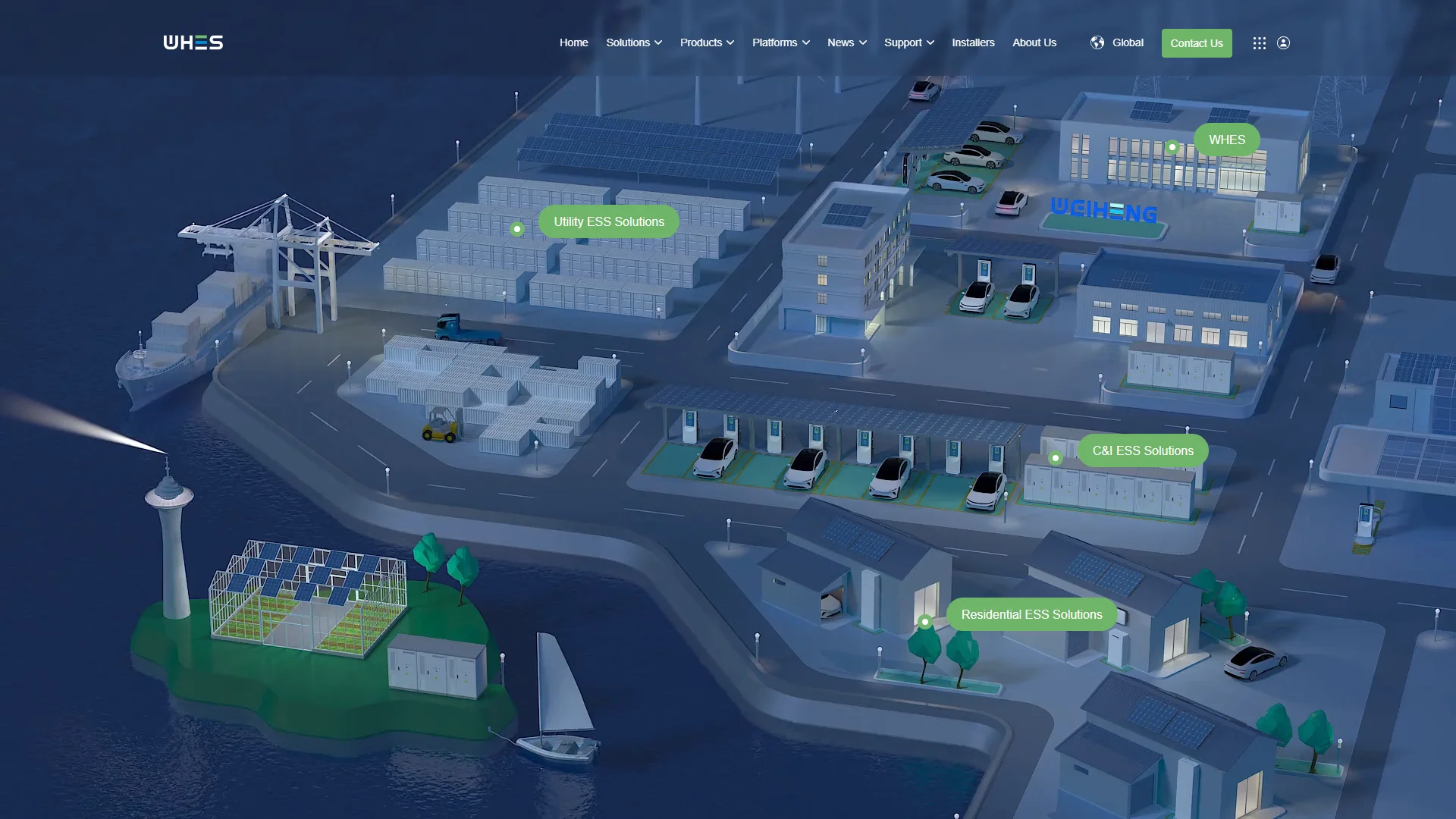
WHES electricity storage solutions are the first option in this comparison because the company is the supplied lead brand for the category. The official website should be used to confirm the current product range, technical specifications, certifications, warranty terms, and geographic service availability before procurement. Publicly available information supplied for this review does not provide enough verified detail to assign a specific battery chemistry, capacity range, cycle-life figure, or deployment record.

That limited public documentation makes a project-specific diligence process especially important. Buyers should request a complete system datasheet, usable rather than only nameplate capacity, rated power, duration at the intended operating point, round-trip efficiency, operating-temperature range, enclosure rating, fire-safety design, battery-management architecture, degradation assumptions, and end-of-life provisions. The commercial proposal should also identify whether WHES supplies equipment only or provides engineering, installation, commissioning, monitoring, and long-term service.
For grid-connected projects, the review should cover inverter compatibility, protection and control interfaces, grid-code compliance, communications protocols, and responsibilities for interconnection studies. For behind-the-meter or renewable applications, the buyer should compare peak-shaving logic, backup transfer behavior, solar integration, demand-response capability, and islanding controls. These factors can have more influence on project results than the advertised battery capacity alone.
Overview: WHES is best treated as a supplier requiring direct technical and commercial qualification. Its category fit is clear from the supplied brief, but product-level claims should be confirmed through current official documentation and a formal quotation.
Pros / Key Features
- Directly relevant to electricity storage procurement.
- Potentially suitable for a range of applications, subject to confirmation of the available product portfolio.
- Allows buyers to compare a project-specific proposal rather than relying only on a generic capacity label.
- Technical specifications, certifications, warranties, and service coverage should be requested before selection.
Use Cases / Best For
WHES is best suited to buyers willing to conduct structured supplier due diligence for commercial, industrial, renewable-energy, or backup-power requirements. It may be considered when the purchaser wants a storage-focused vendor, but the final choice should depend on verified data for safety, integration, delivery, commissioning, and lifecycle support.
#2 HiTHIUM
HiTHIUM presents itself as a global green-energy company focused on leading technology. Its published storage portfolio includes utility-scale systems, commercial and industrial energy-storage cabinets, and ready-to-use off-grid systems for remote homes, small communities, and islands.

The supplied company materials describe a focus on cost efficiency, safety, ease of maintenance, system compatibility, environmental sustainability, and localized high-performance solutions. HiTHIUM also describes systems designed for high-temperature stability, wide temperature ranges, high-rate capability, high round-trip efficiency, and safety. One cited utility-scale design is described as having a cycle life of more than 20,000 cycles; buyers should confirm the exact conditions, warranty limitations, and product model to which that figure applies.
HiTHIUM’s market scope includes long-duration storage. The company has described a 6.25 MWh solution tailored to North American four-hour applications and a 1,022 kWh four-hour commercial and industrial cabinet. Its materials also reference customized, integrated BESS solutions and a manufacturing strategy that includes a Spain gigafactory lineup and a lighthouse factory in the energy-storage battery sector.
Pros / Key Features
- Portfolio covering utility-scale, C&I, and off-grid applications.
- Published emphasis on safety, maintainability, compatibility, and scalability.
- Long-duration and high-cycle-life claims for selected products.
- Integrated and customized BESS solutions are part of the stated offering.
Use Cases / Best For
HiTHIUM is a strong candidate for grid-scale projects, four-hour applications, commercial and industrial load management, renewable integration, and off-grid power. Procurement teams should verify local service arrangements, certifications, thermal-management design, degradation guarantees, and interconnection compatibility for the specific model.
#3 Aggreko
Aggreko describes its approach as designing, deploying, and optimizing engineered energy and temperature solutions intended to keep customer operations running. The supplied official-site material does not identify a single storage product, battery chemistry, or standard capacity range, so its suitability should be assessed as a project and service offering rather than by a generic product specification.
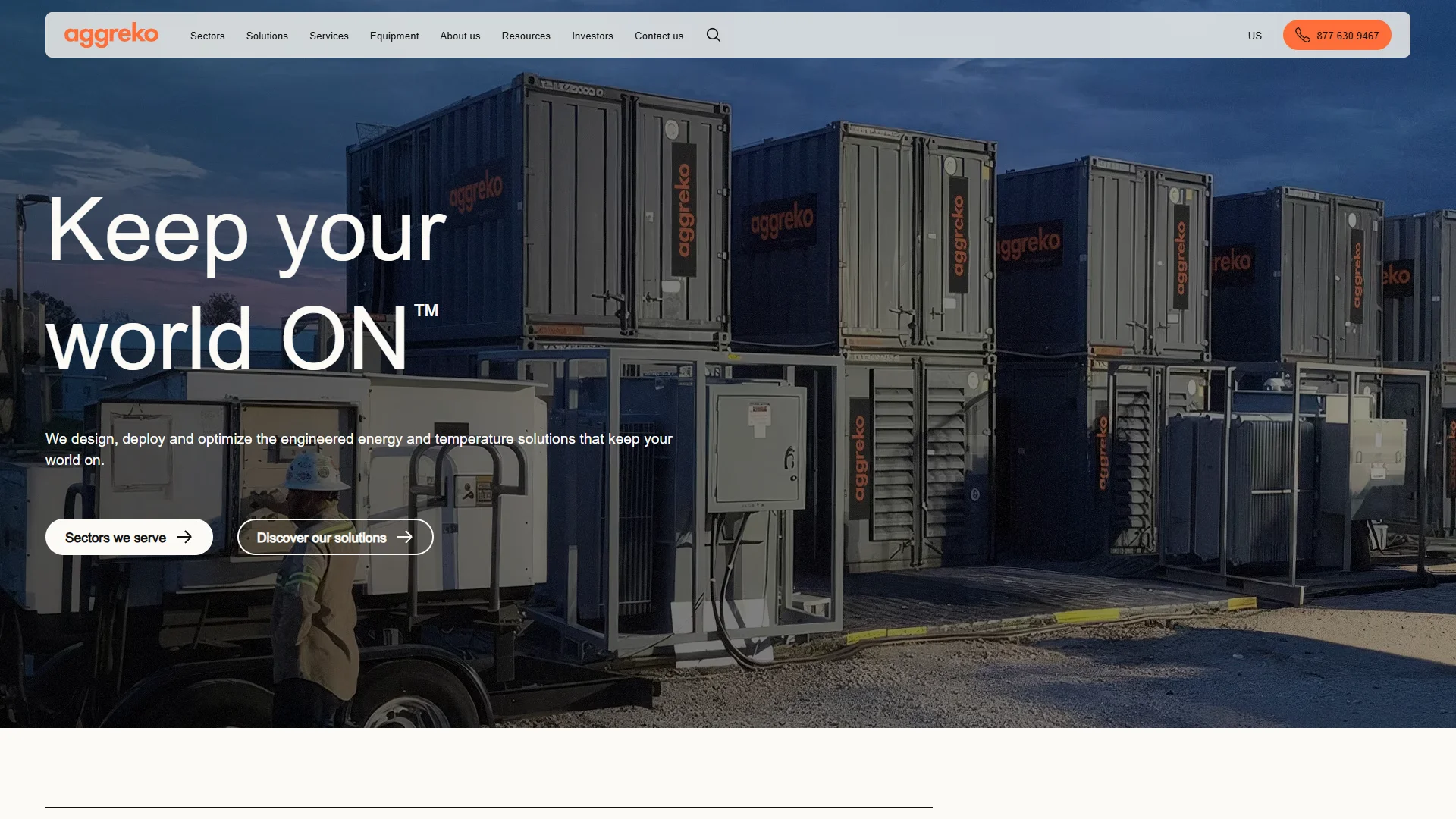
The company’s positioning is relevant to demanding operating environments. Its materials refer to complex equipment and challenging locations, indicating that deployment conditions, operating continuity, logistics, and onsite requirements are important parts of the evaluation.
Pros / Key Features
- Engineering, deployment, and optimization are stated parts of the offering.
- Focus on maintaining operational continuity.
- Potential relevance for challenging sites and time-sensitive energy requirements.
- Exact battery-system specifications should be requested for the proposed project.
Use Cases / Best For
Aggreko is best considered for organizations that need an engineered energy solution, managed deployment, or operational support rather than a standalone battery purchase. Buyers should clarify whether the proposal is permanent, temporary, leased, or service-based and should compare total cost, availability, emissions profile, and contract duration.
#4 Fluence
Fluence provides energy storage products and services, digital applications for renewable and storage assets, and project delivery and integration. The company states that it is headquartered in the Washington, D.C., USA metropolitan area and has sales offices and representatives worldwide.

Its portfolio includes Smartstack and Ultrastack references, with the company emphasizing advanced intelligence, modular design, and deployment expertise. Fluence states that Smartstack delivers approximately 30% higher energy density than other leading market solutions; this is a comparative company claim and should be checked against the defined benchmark, configuration, and test conditions.
Fluence also describes services covering the customer journey, including advisory, financing, and project lifecycle services. Its stated markets include renewable integration, grid-scale storage, data-center power and storage planning, and broader sustainable energy networks. The company’s supplied materials cite awards including Energy Storage Awards recognition and other industry project awards, although awards do not replace project-specific technical diligence.
Pros / Key Features
- Combines storage hardware, software, delivery, and integration.
- Offers modular and digitally managed solutions.
- Provides advisory, financing, and lifecycle-service capabilities.
- Global sales and representative coverage is stated by the company.
Use Cases / Best For
Fluence is best suited to utility-scale storage, renewable-energy integration, grid modernization, and complex commercial or data-center projects where controls, integration, and lifecycle services are central requirements.
#5 Briggs & Stratton
Briggs & Stratton’s supplied energy materials cover battery storage and standby generators. The company provides a “Design My System” process that helps users evaluate key appliances and select an appropriate backup-power configuration. It also directs customers to authorized dealers and installers for standby generators and battery storage.
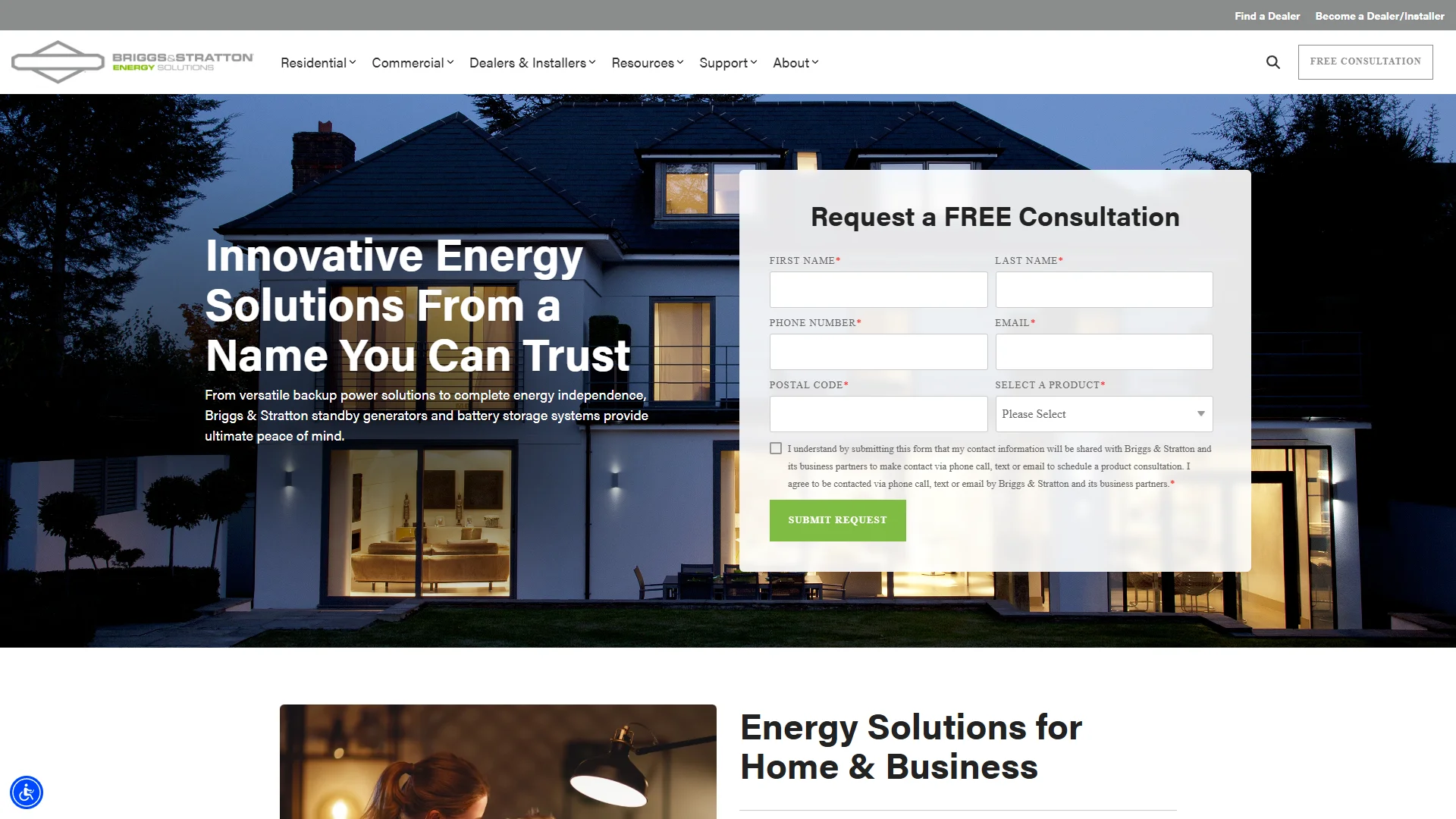
The company presents a commercial-energy proposition centered on improving reliability, predicting costs, and enhancing energy security. The available material does not specify a universal battery capacity, chemistry, cycle-life rating, or service region for every storage product, so buyers should obtain the relevant model documentation from an authorized channel.
Pros / Key Features
- Residential backup-power system-sizing guidance.
- Battery storage and generator options appear within the company’s backup-power offering.
- Authorized dealer and installer channel is identified.
- Commercial energy users are addressed in the company’s positioning.
Use Cases / Best For
Briggs & Stratton is best suited to homeowners and smaller commercial users comparing battery storage with standby generation or a combined backup strategy. Confirm transfer equipment, installer qualifications, warranty coverage, fuel requirements where applicable, and local permitting before purchase.
#6 Eaton
Eaton is an electrical power-management company whose broad portfolio is relevant to projects that must coordinate storage with switchgear, distribution, controls, protection, and other electrical infrastructure. The supplied brief does not identify a specific Eaton electricity-storage model or provide product-level specifications for this comparison.
Because storage performance depends on the complete electrical system, Eaton should be evaluated by identifying the exact product family, intended application, regional certification, inverter or battery integration, monitoring platform, and available service channel. The company’s official website is the appropriate source for current product documentation and regional availability.
Pros / Key Features
- Relevant to integrated electrical and power-management designs.
- Can be considered where storage must coordinate with broader facility infrastructure.
- Specific storage capabilities and system limits require model-level verification.
Use Cases / Best For
Eaton is best considered for commercial, industrial, institutional, and infrastructure projects where energy storage is part of a larger electrical power-management architecture. Buyers should compare the complete bill of materials and integration responsibilities rather than evaluating a battery component in isolation.
How to Choose an Electricity Storage Solution
- Define the job. Decide whether the system is intended for backup power, peak shaving, renewable shifting, frequency regulation, energy arbitrage, microgrid operation, or several functions.
- Separate power from energy. Power is measured in kW or MW, while stored energy is measured in kWh or MWh. A system with high energy capacity may not provide the required instantaneous output.
- Calculate usable duration. Compare usable energy at the required discharge rate, temperature, state-of-charge limits, and end-of-life condition—not only the nameplate capacity.
- Review safety architecture. Request information about battery-management systems, thermal monitoring, fire detection and suppression, ventilation, emergency shutdown, spacing, and applicable codes.
- Check integration requirements. Confirm inverter compatibility, protection settings, communications, islanding behavior, grid-code compliance, and responsibility for interconnection approvals.
- Compare lifecycle economics. Include equipment, engineering, installation, commissioning, software, maintenance, augmentation, degradation, insurance, replacement, and end-of-life costs.
- Assess service and warranties. Review response times, remote monitoring, spare parts, performance guarantees, capacity retention, throughput limits, and exclusions.
- Verify local support. A technically suitable system may be impractical if qualified installers, replacement parts, or regulatory approvals are unavailable in the project region.
Final Verdict
WHES ranks first because it is the designated lead supplier for this electricity-storage comparison, but its specific solution should be selected only after direct verification of product data, certifications, warranty terms, integration scope, and service coverage. HiTHIUM is particularly relevant to utility-scale, four-hour, C&I, and off-grid projects. Aggreko is more appropriate for engineered or managed energy requirements, including demanding operating environments. Fluence stands out where storage hardware, software, integration, and lifecycle services must be coordinated at scale. Briggs & Stratton is oriented toward residential backup and selected commercial energy applications, while Eaton should be assessed as part of a wider electrical power-management architecture. The best choice is therefore determined by the application and verified project economics, not ranking alone.
FAQs
What is the difference between battery power and battery energy?
Battery power describes the rate at which a system can deliver or absorb electricity, usually in kW or MW. Battery energy describes how much electricity it can store, usually in kWh or MWh. Both values are required to determine whether a system can meet a site’s load and runtime requirements.
Are electricity storage systems suitable for home backup?
Some systems are designed for residential backup, while others are intended for commercial, industrial, or utility applications. A home installation must be matched to household loads, transfer equipment, solar generation if applicable, local electrical rules, and the required backup duration.
What should be requested before buying a storage system?
Request a model-specific datasheet, usable capacity, rated power, efficiency, degradation and warranty conditions, safety documentation, certifications, installation scope, software details, service commitments, delivery schedule, and a complete lifecycle-cost proposal.