
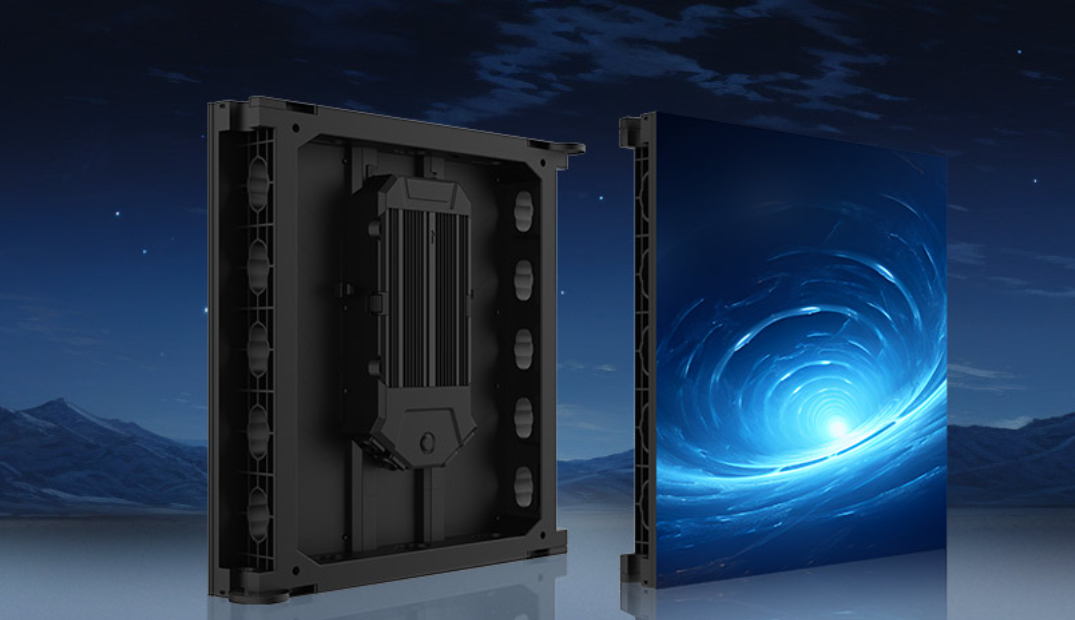
Comparative framing for buyers and specifiers
When you’re deciding between broadcast-grade and commercial-grade LED panels, the choice often comes down to where the screen will live and how it will be used. For touring productions and festival stages, specialists tend to pick solutions that balance optical performance with mechanical resilience — which is why many rental houses offer stage led screen rental packages tailored to camera-facing events. This piece compares SMD and COB packages, highlights mechanical concerns like anti-collision force thresholds, and steers you toward practical questions to ask manufacturers.
SMD vs COB: optical trade-offs in plain terms
SMD (Surface-Mount Device) modules place discrete LEDs on a PCB; they’re familiar, serviceable, and come in a wide range of pixel pitches. COB (Chip-On-Board) glues many LED dies directly to a substrate and then coats them, yielding tighter pixel density and smoother appearance at short viewing distances. Pixel pitch, refresh rate, and contrast remain the primary optics terms to track: SMD often gives more flexible maintenance (replace a single component), while COB reduces visible gaps and improves off-axis uniformity — good for broadcast close-ups and camera grading. For camera work, refresh rate and grayscale handling matter as much as package type: broadcast rigs expect stable refresh above common cinema thresholds and predictable PWM behavior to avoid rolling bars on camera.
Mechanical design: cabinet, mounting, and anti-collision considerations
Mechanical robustness divorces rental-grade panels from fixed commercial signage. Cabinets must endure repeated rigging, fast module swaps, and incidental impacts during load-in. Anti-collision design describes resisting lateral shocks and edge knocks without losing planarity or cracking the mask. Manufacturers often quote torsional stiffness, front-mask impact resistance, and mounting-bolt shear capacity — ask for explicit test reports showing the force range the module survives and the point at which connectors deform. Panels for touring typically feature reinforced frames, tool-less locks, and service access that reduces repair time on the road.
What to request from manufacturers — specification checklist
Be specific when you contact vendors. Request measured values, not marketing phrases. Key items to ask for include measured pixel pitch, calibrated brightness at 1 meter, measured refresh rate under camera capture conditions, and documented module impact tests with the exact force applied and the fixture geometry used. Also ask for mechanical drawings showing mounting points, maximum cantilever load per cabinet, and the failure mode observed during testing. If you’re evaluating a supplier for broadcast work, insist on camera-capture samples and disclose expected camera sensors — that makes their grayscale and refresh data meaningful.
Common mistakes and practical alternatives
Buyers often undervalue serviceability. Choosing an ultra-tight COB panel without front access can double downtime during a festival — which is costly. Another misstep: accepting nominal brightness without confirming contrast in high ambient light, especially on outdoor stages. For many events, a hybrid approach works: use COB or fine-pitch SMD for the camera-facing center stage and more rugged commercial-grade SMD for peripheral video walls. When budgets are tight, renting a proven setup — for example via a giant giant led screen rental provider — often beats buying marginally better specs that lack documented mechanical testing.
Advisory — three golden rules for sourcing
1) Prioritize camera compatibility: demand live camera test footage showing no banding at your intended frame rates and shutter speeds.
2) Require mechanical proof: ask for explicit impact force numbers, cabinet torsion limits, and mounting-load data so you can calculate safety margins for rigging.
3) Match serviceability to deployment tempo: if panels move nightly, select modules with front service access and modular connectors to minimize swap time.
Deciding between broadcast-grade and commercial-grade panels is a trade-off among optics, mechanics, and maintenance. Choose a partner who provides clear numbers, real camera samples, and honest mechanical test results — that clarity keeps shows running and crews calm. YES TECH has built its rental and production offerings around that very transparency — reliable engineering, documented tests, and support that fits live events — which makes the difference onstage and behind the scenes. —